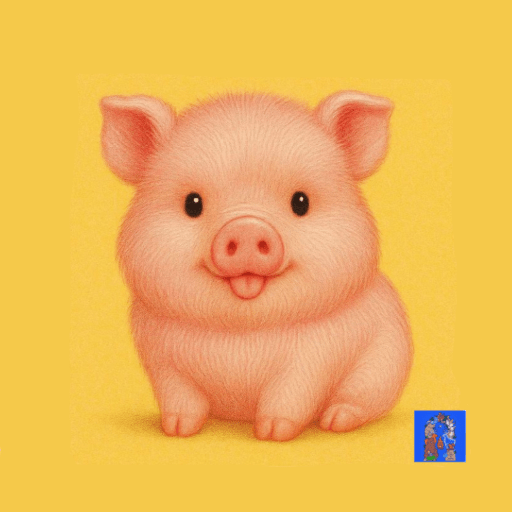


lors de sa promenade dans la forêt, l’enfant rencontre un cochon avec son tablier de cuisine, la salive à la bouche, cuisinant un beau repas dans sa cuisine en extérieur.
Intriguer l’enfant se rapproche pour le rencontrer
Bonjour chère cochon, que prépares tu as cuisiner ?
– Je prépare le repas pour de nombreux amis
– tu aimes cuisiner ?
– Aimer ? C’est plus que sa chère enfant. Avant j’étais psychologue, puis j’ai changer de métier car l’aliment est très puisant pour changer la psychologie de la personne
– Ah bon ?
– oui je dirai même que l’aliment est notre premier médicament, chère enfant.
English
During his walk in the forest, the child comes across a pig wearing a cooking apron, mouth watering, busy preparing a magnificent meal in his outdoor kitchen.
Intrigued, the child approaches him.— Hello, dear pig. What are you cooking?
— I am preparing a meal for many friends.
— Do you like cooking?
— Like it? It’s much more than that, dear child. I used to be a psychologist, but I changed careers, because food has a powerful ability to transform a person’s mind.
— Really?
— Yes. I would even say that food is our first medicine, dear child.
Deutsch
Bei seinem Spaziergang durch den Wald trifft das Kind auf ein Schwein mit einer Kochschürze, das sabbernd damit beschäftigt ist, in seiner Küche im Freien ein wunderschönes Mahl zuzubereiten.
Neugierig nähert sich das Kind ihm.— Hallo, liebes Schwein. Was kochst du da?
— Ich bereite eine Mahlzeit für viele Freunde zu.
— Kochst du gern?
— Gern? Das ist noch viel mehr, liebes Kind. Früher war ich Psychologe, doch ich habe den Beruf gewechselt, weil Nahrung eine große Kraft hat, die Psyche eines Menschen zu verändern.
— Wirklich?
— Ja. Ich würde sogar sagen, dass Nahrung unser erstes Medikament ist, liebes Kind.

Laisser un commentaire